
Schools in Upper East Region
2,298 schools across 15 districts in Upper East Region, 5.3% of every school in Ghana, against an average of 2,727 a region. 48 are senior high schools and 17% of schools with a stated owner are private. The regional capital is Bolgatanga. About 48% of people aged 6 and over can read and write (our calculation from Census 2021 counts).

About Upper East Region
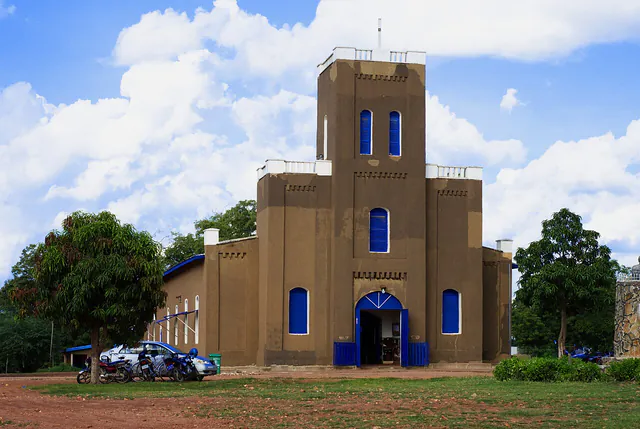
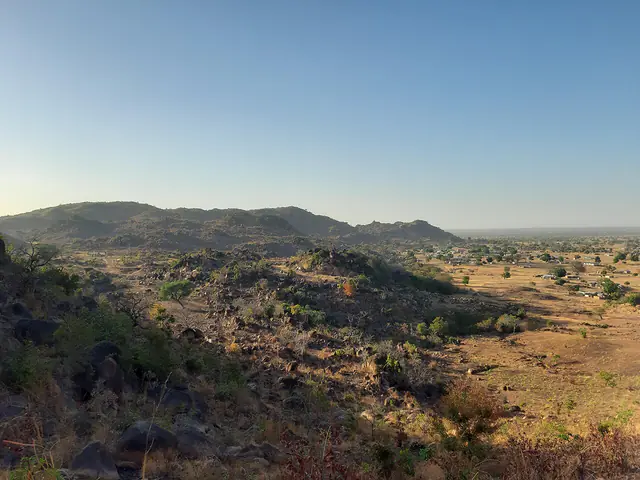
The Upper East Region lies in the north-eastern corner of Ghana, bordering Burkina Faso and Togo, with Bolgatanga as its capital. Unlike its neighbours, it kept its boundaries when the new regions were created in 2019. Gurene, Kusaal, Kasem and Buli are among the languages heard here, and the region has fifteen districts, from Bolgatanga to Bawku and Sandema. Learning has deep roots here. Missionaries opened the first school in the north at Navrongo in December 1907, and Navrongo Senior High School began in 1960. Bolgatanga Technical University became a technical university in 2020. Visitors come for the Tongo Hills and the mud brick cathedral at Navrongo, and the crocodile pond at Paga is a well-known stop. Sirigu pottery and Bolga baskets are known well beyond the region. Festivals follow the farming year, such as Fao in January and Feok in December. To compare schools in your own district, use the SchoolRegistry directory.
How the region came about: Not changed by the 2019 reorganisation: the six new regions were carved from the Northern, Volta, Western and Brong Ahafo regions, so older records for the Upper East still apply
What makes Upper East Region proud
- The first school in the north opened at Navrongo in December 1907.
- Navrongo Senior High School opened in 1960 to narrow the gap in schooling between north and south.
- Primary 6 maths proficiency in the Upper East rose from 5.6 percent in 2013 to 20.2 percent in 2016.
- The mud brick Navrongo Catholic Cathedral is on UNESCO's Tentative List.
- Bolga baskets and Sirigu pottery are made by women's groups and weavers across the region.
Education pride in Upper East
Founding years are shown only where the sources are reliable and agree. A school without a year here is listed without one rather than guessed.
- Navrongo Senior High School (NAVASCO)opened 1960
- The first school in the north was opened by missionaries at Navrongo in December 1907. The first government school followed in Tamale in 1909.
- Bolgatanga Technical University began as a polytechnic in 1999, started classes in September 2003 at Bukere, moved to its Sumbrungu campus in 2007 and became a technical university by Act 1016 in 2020.
Universities and colleges based here
- Bolgatanga Technical University Bolgatanga, Public technical university, since 1999
- St. John Bosco's College of Education Navrongo, College of education
Upper East in numbers
2,298 schools on the register, counted by level and owner, against the whole country.
Schools by level
- Basic schools1,674 · 73%
- Primary schools247 · 11%
- Junior high schools228 · 10%
- Kindergartens67 · 3%
- Senior high schools48 · 2%
- Vocational schools21 · 1%
- Nursing and midwifery training colleges5 · 0%
- Nurseries1 · 0%
- Technical universities1 · 0%
Source: Ministry of Education school register, 2023/24. Basic schools combine KG, primary and JHS at one campus and are not split in the register.
Public and private
Ghana: 29.0% private. Share is of schools with a stated owner.
Literacy and learning
Literacy is our own calculation from the Census 2021 counts. Learning scores are older, and are labelled with the region as it was then.
Share of people aged 6 and over who can read and write, by region
Upper East is 48.1% against 69.8% for the 16 regions together. Highest: Greater Accra 87.9%. Lowest: Savannah 32.8%.
Our calculation from Census 2021 counts (527,768 literate of 1,097,541 aged 6 and over in Upper East). Source: Ghana Statistical Service, 2021.
Learning figures, Upper East Region, before 2019
Source: Ministry of Education, Ghana Education Service, UNICEF and CDD-Ghana, 2013 to 2018. These describe the region with its boundaries before 2019, not today's.
Culture and heritage in Upper East Region
Festival months are the usual ones, and some move with the lunar calendar. Ask locally before you travel.
Festivals and their usual month
- FaoKassena Nankana communities, Navrongo A thanksgiving for protection through the farming season and a good harvest.
- FeokBuilsa, Sandema Marks the victory over slave raiders in the 18th century and a good harvest. War dancers perform with bows, short axes and shields.
- GologoTalensi, Tengzug A pre-harvest festival at the end of the dry season, tied to the Nnoo shrine.
- SamanpiidKusasi, Bawku A harvest thanksgiving first celebrated in 1987.
- Bolga baskets are woven in the Bolgatanga area. In August 2025 the Ghana Export Promotion Authority trained 60 weavers from Nyariga and Zorko in the Bongo District, two centres for the baskets.
- Sirigu is known for pottery, basketry and decorative wall paintings. The women's organisation SWOPA has over 350 members and a visitor centre.
Heritage sites
- otherTongo Hills and Tenzug shrinesTongo and Tenzug The Talensi sacred hills about 16 km from Bolgatanga. They are on UNESCO's Tentative List (2000) as the Tenzug-Tallensi settlements. The Boaram harvest festival is held there in October.
- otherNavrongo Catholic CathedralNavrongo A mud brick cathedral completed in 1920, with wall paintings by local women. It is on UNESCO's Tentative List (2000) and described by the Ghana Museums and Monuments Board.
- otherPaga Crocodile Pond and Pikworo Slave CampPaga A sacred crocodile pond and a camp where captives were held before the journey to Salaga, as described by the Ghana Tourism Authority.
- otherWuriyanga MosqueNear Garu A Djenne style mud mosque. The Ghana Museums and Monuments Board dates it to the 19th century and UNESCO's Tentative List entry on the northern mosques names it as the Djenne type example.

The economy of Upper East Region in a line
Farming is the main work, and Bolgatanga has long been a trading crossroads. Bolga baskets are sold nationally and abroad, with export support from GEPA.
Districts of Upper East Region
Every district, with its private share and senior high count. Schools with no district recorded are in the region total only.
| District | Schools | Private | Senior high |
|---|---|---|---|
| Bolgatanga Municipal | 324 | 16% | 2 |
| Bongo | 257 | 16% | 7 |
| Bawku Municipal | 236 | 15% | 3 |
| Bawku West | 219 | 15% | 3 |
| Kasena Nankana West | 168 | 18% | 7 |
| Kasena Nankana Municipal | 160 | 22% | 5 |
| Talensi | 144 | 15% | 1 |
| Pusiga | 107 | 17% | 1 |
| Builsa North Municipal | 102 | 13% | 2 |
| Tempane | 101 | 10% | 1 |
| Binduri | 94 | 26% | 2 |
| Garu | 94 | 23% | 0 |
| Nabdam | 85 | 14% | 1 |
| Builsa South | 83 | 12% | 3 |
| Bolgatanga East | 61 | 31% | 0 |
Cities and towns in Upper East Region
- Bolgatanga city
- Bolgatanga77
- Navrongo64
- Bawku36
- Bongo35
- Zebilla23
- Sandema21
- Pusiga20
- Winkogo17
- Aramkoliga16
- Nyorigu16
Senior high schools in Upper East Region
The first ten of 48. The full list, by district, has its own page.
| School | Level | Ownership | District |
|---|---|---|---|
| Awe Senior High Technical School | Senior High | public | Kasena Nankana Municipal |
| Azantilow Senior High Technical School | Senior High | public | Builsa North Municipal |
| Azeem-Namoa SHTS | Senior High | public | Bongo |
| Azoka Memorial Academy S.H.S. | Senior High | private | Bawku Municipal |
| Bawku Senior High School | Senior High | public | Bawku Municipal |
| Bawku Senior High Technical School | Senior High | public | Bawku Municipal |
| Benguri KG/ Primary B | Senior High | public | Binduri |
| Beo Community Senior High Technical School | Senior High | public | Bongo |
| Binduri Community Senior High School | Senior High | public | Binduri |
| Bolga Girls' Senior High School | Senior High | public | Bolgatanga Municipal |
All 48 senior high schools in Upper East Region
Universities and colleges in Upper East Region
1 universities, technical universities, colleges of education and other tertiary institutions on the register carry a Upper East region. 5 nursing and midwifery training colleges are listed.
| School | Level | Ownership | District |
|---|---|---|---|
| Bolgatanga Technical University | Technical university | public | Bolgatanga Municipal |
Search universities in Upper East Region
Schools near me in Upper East Region
Looking for schools near you, or near Upper East Region? Open the near me tool and, if you choose to share your location, it lists the closest schools to where you are. Your position is used once to work out the list and is not stored. You can pick a town instead.
Find schools near meQuestions people ask about schools in Upper East Region
- How many schools are there in Upper East Region?
- 2,298 schools across 15 districts, which is 5.3% of every school in Ghana. 48 of them are senior high schools.
- Which district in Upper East Region has the most schools?
- Bolgatanga Municipal, with 324 schools.
- How do I find schools near me in Upper East Region?
- Open the schools near me page and allow your location, or choose your town. It lists the closest schools to you from the schools whose position we trust. Each district page in Upper East Region also lists its schools.
- What are the best schools in the Upper East Region?
- We do not rank schools. Navrongo Senior High School, opened in 1960, is a long-established senior high school. For tertiary study, Bolgatanga Technical University and St. John Bosco's College of Education are in the region. To compare schools near you, use the SchoolRegistry directory and filter by district.
- Did the Upper East Region change in 2019?
- No. The Upper East kept its boundaries when the new regions were created in 2019, so older results for the region still describe the same area. Its neighbour, the former Northern Region, was split into three.
- How did Upper East pupils do in national learning assessments?
- In the National Education Assessment, the share of Primary 6 pupils reaching proficiency in maths rose from 5.6 percent in 2013 to 20.2 percent in 2016. English proficiency was 22.7 percent in 2013 and 22.1 percent in 2016.