
Schools in Savannah Region
968 schools across 7 districts in Savannah Region, 2.2% of every school in Ghana, against an average of 2,727 a region. 19 are senior high schools and 14% of schools with a stated owner are private. The regional capital is Damongo. About 33% of people aged 6 and over can read and write (our calculation from Census 2021 counts).

About Savannah Region
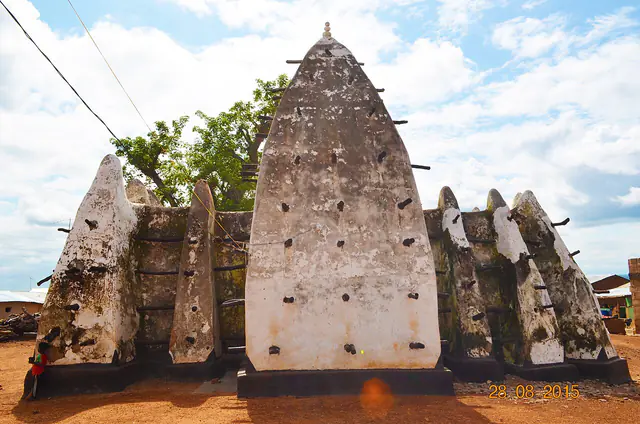
The Savannah Region is the largest region in Ghana by area, and its capital is Damongo. It was carved out of the former Northern Region after the referendum of 27 December 2018. Gonja is the main language, and the Gonja Kingdom has its seat here, alongside Vagla, Nchumuru and several other peoples. The region has seven districts, from Bole and Sawla in the west to Salaga and Kpalbe in the east. Because the region is new, many school and results records still sit under the old Northern Region. In June 2025 the President announced plans for a public university and a technical training centre in the region. Mole National Park, Larabanga Mosque and the Salaga slave market site are among the sites visitors are pointed to. To compare schools in your district, the SchoolRegistry directory is a good place to start.
How the region came about: Created from the former Northern Region after the referendum of 27 December 2018; Constitutional Instrument 115 was signed on 12 February 2019
What makes Savannah Region proud
- Mole National Park is Ghana's first and largest protected area, according to the park's own site.
- Larabanga Mosque dates to about 1421 and is named in UNESCO's Tentative List entry on the northern mud mosques.
- The Salaga Slave Market and Wells were restored and commissioned as a heritage site in July 2024.
- The Savannah Regional House of Chiefs set up the Savannah College of Education in Daboya to train teachers within the region.
Education pride in Savannah
Founding years are shown only where the sources are reliable and agree. A school without a year here is listed without one rather than guessed.
- Damongo Senior High School (DASS)Damongo
- On 16 June 2025, during a visit to Damongo, the President announced plans for a public University of Agriculture and Allied Sciences in the region, a STEM senior high school at Tinga in the Bole District and a TVET centre of excellence in Salaga. These are announced plans, so check progress before relying on them.
Universities and colleges based here
- Savannah College of Education Daboya, College of education
- Damongo Nursing and Midwifery Training College Damongo, Nursing and midwifery training college
Savannah in numbers
968 schools on the register, counted by level and owner, against the whole country.
Schools by level
- Basic schools788 · 81%
- Junior high schools74 · 8%
- Primary schools72 · 7%
- Senior high schools19 · 2%
- Vocational schools8 · 1%
- Kindergartens4 · 0%
- Nurseries1 · 0%
Source: Ministry of Education school register, 2023/24. Basic schools combine KG, primary and JHS at one campus and are not split in the register.
Public and private
Ghana: 29.0% private. Share is of schools with a stated owner.
Literacy and learning
Literacy is our own calculation from the Census 2021 counts. Learning scores are older, and are labelled with the region as it was then.
Share of people aged 6 and over who can read and write, by region
Savannah is 32.8% against 69.8% for the 16 regions together. Highest: Greater Accra 87.9%. Lowest: Savannah 32.8%, and 57.4% of people aged 3 and over have never attended school.
Our calculation from Census 2021 counts (171,085 literate of 521,415 aged 6 and over in Savannah). Source: Ghana Statistical Service, 2021.
- The 2021 census counted 138,098 people aged 6 and over in the Savannah Region who were attending school, 64,699 of them female.2021
- The region was part of the old Northern Region until 2019, so its earlier learning results sit inside the old Northern figures. There, Primary 6 maths proficiency rose from 2.8 percent in 2013 to 10.7 percent in 2016.2013 to 2016, old boundaries
Culture and heritage in Savannah Region
Festival months are the usual ones, and some move with the lunar calendar. Ask locally before you travel.
Festivals and their usual month
Marked in the region, with no usual month we can confirm: Damba, Jintigi (Fire Festival).
- DambaGonja and other Mole-Dagbani peoples, including Damongo Held under the lunar calendar by Dagbon, Mamprugu, Gonja and Nanumba. Graphic Online lists it among the festivals of the Damongo area.
- Jintigi (Fire Festival)Gonja, Damongo area Named by Graphic Online as the fire festival of the Damongo area.
- Daboya is described as a centuries-old centre of indigo dyeing. The Mole National Park site lists Daboya Smock Village among the attractions near the park.
Heritage sites
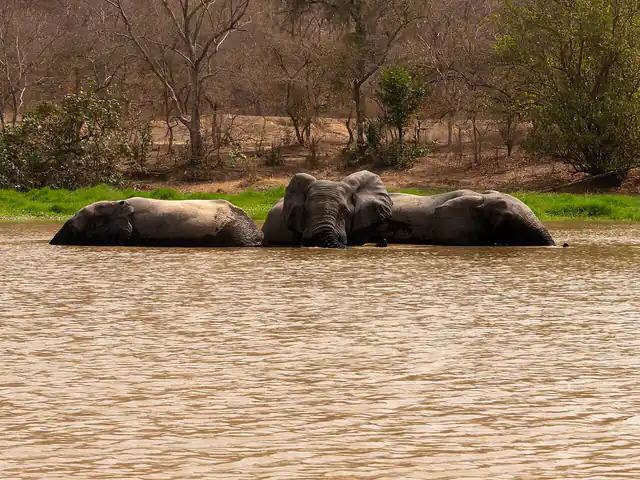
- national parkMole National ParkNear Larabanga and Damongo The park's own site says it is Ghana's first and largest protected area, covering 4,577 km2 of Guinea savannah. UNESCO's Tentative List entry from 2000 gives about 4,840 km2 and calls it the first wildlife protected area in Ghana. It is on the Tentative List, not the World Heritage List.
- otherLarabanga MosqueLarabanga The Ghana Museums and Monuments Board dates it to about 1421. UNESCO's Tentative List entry for the northern mud mosques uses it as the example of the Sudanic style. Tentative List status is not World Heritage status.
- otherSalaga Slave Market and WellsSalaga An 18th-century slave market, restored and commissioned as a tourist site on 22 July 2024.
- otherMognori Eco VillageMognori Described by Graphic Online as a community tourism project with drumming, dancing and farm visits.
.jpg)
The economy of Savannah Region in a line
Farming is the main work, and visitors to Mole National Park and the Larabanga area add to local trade. Graphic Online describes the Damongo area as home to many ethnic groups who farm and trade side by side.
Districts of Savannah Region
Every district, with its private share and senior high count. Schools with no district recorded are in the region total only.
| District | Schools | Private | Senior high |
|---|---|---|---|
| Bole | 204 | 20% | 4 |
| Sawla Tuna Kalba | 199 | 9% | 2 |
| Central Gonja | 185 | 12% | 3 |
| East Gonja Municipal | 132 | 14% | 5 |
| West Gonja Municipal | 102 | 23% | 4 |
| North Gonja | 82 | 9% | 1 |
| North East Gonja | 63 | 3% | 0 |
Cities and towns in Savannah Region
Senior high schools in Savannah Region
The first ten of 19. The full list, by district, has its own page.
| School | Level | Ownership | District |
|---|---|---|---|
| Bamboi Community Day Senior High Sch | Senior High | public | Bole |
| Bamboi Community Day SHS | Senior High | public | Bole |
| Bole Senior High School | Senior High | public | Bole |
| Buipe Senior High School | Senior High | public | Central Gonja |
| Daboya Community Day SHS | Senior High | public | North Gonja |
| Damongo Senior High School | Senior High | public | West Gonja Municipal |
| Mpaha Community Day Senior High School | Senior High | public | Central Gonja |
| Mpaha Community Senior High School | Senior High | public | Central Gonja |
| Ndewura Jakpa Secondary/Technical School | Senior High | public | West Gonja Municipal |
| Saint Anne's Girls' Senior High School | Senior High | private | West Gonja Municipal |
All 19 senior high schools in Savannah Region
Schools near me in Savannah Region
Looking for schools near you, or near Savannah Region? Open the near me tool and, if you choose to share your location, it lists the closest schools to where you are. Your position is used once to work out the list and is not stored. You can pick a town instead.
Find schools near meQuestions people ask about schools in Savannah Region
- How many schools are there in Savannah Region?
- 968 schools across 7 districts, which is 2.2% of every school in Ghana. 19 of them are senior high schools.
- Which district in Savannah Region has the most schools?
- Bole, with 204 schools.
- How do I find schools near me in Savannah Region?
- Open the schools near me page and allow your location, or choose your town. It lists the closest schools to you from the schools whose position we trust. Each district page in Savannah Region also lists its schools.
- What are the best schools in the Savannah Region?
- We do not rank schools. To compare schools near you, use the SchoolRegistry directory and filter by district.
- When was the Savannah Region created?
- Voters in the area approved it in the referendum of 27 December 2018, and Constitutional Instrument 115 was signed on 12 February 2019. It was carved out of the former Northern Region, with Damongo as its capital.
- Where can I find school results for the Savannah Region?
- Region-level learning results for the Savannah Region on its own are limited. Results from before 2019 belong to the old Northern Region, which included this area. The 2021 census counted 138,098 people aged 6 and over in the region attending school.